
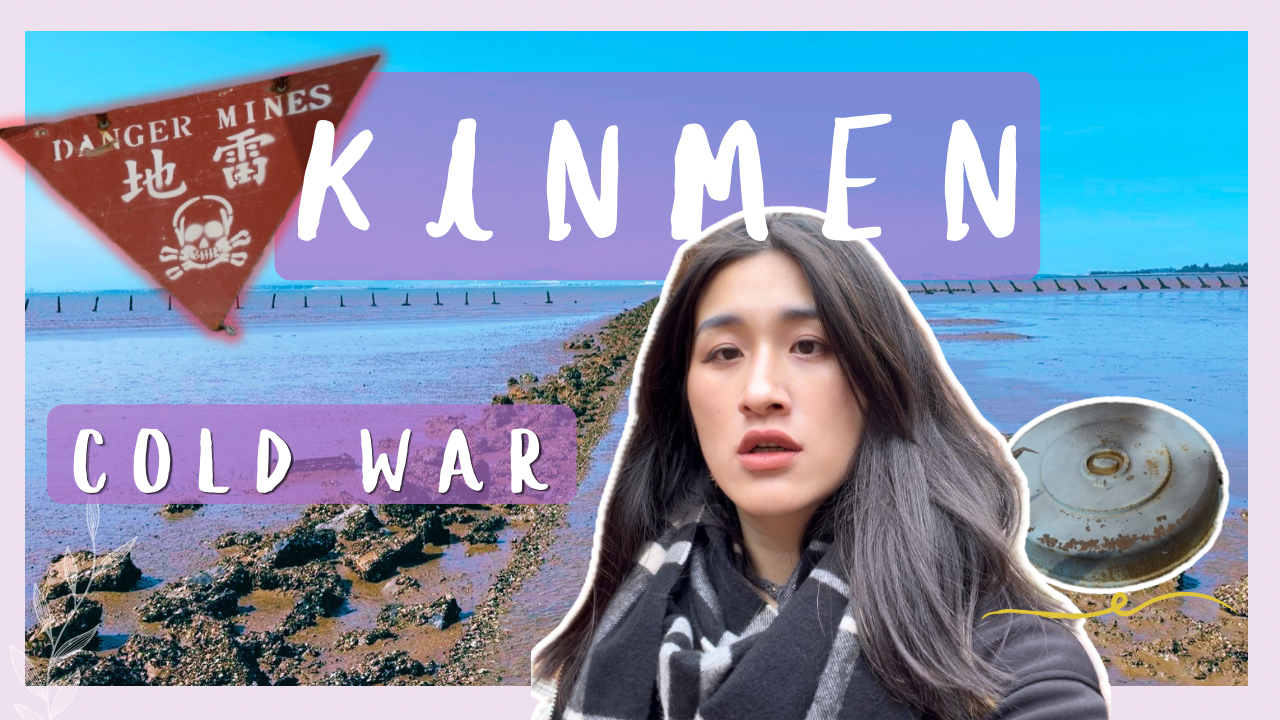
There is a place in Taiwan that used to be a battlefield — yet today, it feels like one of the most peaceful islands in Asia.
That place is Kinmen.
Most travelers visiting Taiwan seldom make it there. They stay in Taipei, Tainan, or Kaohsiung. But for me, Kinmen is home. And maybe because this is my root from. I never realized how unusual it truly was until I started traveling abroad.
As a tour guide, I often tell people that Kinmen is one of the few places where history is not hidden inside museums — it still quietly lives in the landscape, the architecture, the food, and even in the personality of the locals.
This article is not only a travel guide.
It is also a small introduction to the island that shaped me.
A Taiwanese Island with a Complicated Identity
Kinmen belongs to Taiwan.
But officially, the household registration system still places Kinmen under Fujian Province — a historical structure left behind by the Chinese Civil War and the Cold War era.
Confusing? Yes. Even for locals sometimes.
From 1949 to 1958, real battles happened here. Kinmen became one of the frontlines between two political worlds. Like the Berlin Wall or the Korean DMZ, this tiny island once stood at the edge of global tension.
But unlike those places, Kinmen today feels incredibly calm.
Maybe that is what makes it so fascinating.
Kinmen: An Island of Overseas Chinese History
Many people think Kinmen is only about war history. But to me, Kinmen is equally an overseas Chinese island.
Long ago, Kinmen’s land was dry and poor. Farming alone could not support everyone, so many locals followed the northeast monsoon winds and sailed to Southeast Asia and Japan in search of work and opportunity.
Some became successful merchants overseas. When they returned home, they built large traditional houses and Western-style mansions across the island.
That is why Kinmen’s villages feel so unique.
In many villages, you can still see beautiful overseas Chinese architecture standing beside traditional Minnan houses. Some villages belonged to one giant family clan, while others were multi-family communities built near harbors for trade and survival.
One famous example is Deyue Tower, a defensive gun tower built to protect villagers from pirates. Because the village was located close to the harbor, pirate attacks were once common. Architecture here was never only aesthetic — it was practical survival.
Another place I love is Shanhou Folk Culture Village, one of the rare “overseas Chinese-style Minnan villages” in Kinmen. The Wang family made their fortune in Japan before returning to Kinmen and investing heavily in education and local construction.
Education has always been deeply important in Kinmen culture.
Many ancestors first went abroad as laborers. After earning money and returning home, they hoped the next generation could study, move upward socially, and live a different life. Overseas Chinese communities brought back not only wealth, but also modern ideas, educational values, and global perspectives.
Even during wartime, education remained important.
My father grew up during the military control period. Resources were limited, life was difficult, but he still studied hard. He rarely talks about it because he is a very humble person — which, honestly, feels very Kinmen to me.
The Cold War Never Fully Left the Island
After World War II, Kinmen became one of the world’s Cold War frontlines.
From 1956 to 1992, nearly everyone on the island lived under military administration. Soldiers were everywhere. War was not an abstract political concept — it was daily life.
When I was younger, elders often warned us:
“Don’t go near the beach. There were landmines.”
And they were serious.
It was not until 2007 that large-scale landmine removal officially began in Kinmen. Thousands of landmines were cleared from the island.
Maybe that is why the ocean in Kinmen feels emotionally different to me.
It is beautiful, but also strangely distant — as if the island still remembers what happened there.
One important historical site is the Guningtou Battlefield, where a major battle helped determine Taiwan’s political future. Another is Zhaishan Tunnel, a massive underground granite tunnel system built to protect military supplies and civilians from bombardment.
And then there is the Beishan Broadcasting Wall.
During the Cold War, messages and songs were broadcast across the sea toward mainland China. Yes — including songs by Teresa Teng. Her music crossed political borders even when people could not.
This is not just textbook history.
For Kinmen people, this was ordinary life.
Kinmen Food: Survival Turned into Culture
Kinmen food is simple, strong, and deeply connected to survival history.
One of the most iconic dishes is Kinmen-style Cantonese congee, locally called “Zhou Mi.” During wartime food shortages, rice had to be stretched as far as possible, so the rice was cooked until it completely dissolved into the soup. If you can still see rice grains, locals might jokingly say it is not real Kinmen-style congee.
People usually eat it with Kinmen-style youtiao — soft fried dough sticks that taste more like bread than the crispy versions common elsewhere in Taiwan.
Every time I return home, my grandfather still buys breakfast for me because I cannot wake up early enough myself. Apparently I am still the spoiled youngest granddaughter.
Another famous comfort food is fried instant noodles from Hequan Grocery Store.
During the military era, soldiers became tired of standard military meals and followed the smell of fried noodles coming from local shops. The dish is oily, heavy, chaotic, and absolutely delicious. The ingredients feel almost random — like a grandmother emptying the refrigerator — yet somehow everything works together perfectly.
Kinmen is also famous for Gongtang peanut candy.
My personal favorite is the “pig trotter” style Gongtang — despite the name, it is completely vegan. It has a chewy outer texture and deep roasted peanut flavor without falling apart into crumbs everywhere. Some shops even add brown sugar for a richer caramel-like sweetness.
And then there are Kinmen oysters.
Smaller than many oysters elsewhere, but incredibly intense in flavor.
For me, oysters are connected to childhood memories: my grandmother slowly peeling oysters outside the house while the family prepared dinner together.
The food in Kinmen is not fancy.
But it feels honest.
Quiet Nights and Kaoliang Liquor
At night, Kinmen becomes extremely quiet.
Some people say this comes from the island’s wartime history. Others say it is simply because the wind is strong and the winters are cold.
There are no giant clubs or loud nightlife districts here.
Instead, people gather with family and friends, eat warm food, chat slowly, and drink Kaoliang liquor.
Locals will tell you one important rule immediately:
Never add water.
And for beginners, there is another trick: put the Kaoliang in the freezer first. Slightly frozen Kaoliang tastes surprisingly smooth.
Somehow, Kinmen nights always feel slow in the best possible way.
The Wind Lions of Kinmen
If you visit Kinmen, there is one final mission:
Find the Wind Lions.
These stone guardian statues were built to protect villages from strong sea winds and negative energy. Some are tiny. Some are huge. Some look cute, others strangely serious. A few even look like pop idols or detectives.
To me, Wind Lions are not superstition.
They represent the way island communities learned to communicate with nature — transforming fear, respect, and hope into visible symbols of protection.
Why Kinmen Still Matters to Me
Kinmen is not only a place of barren land, military tunnels, or battlefield history.
It is also a story about survival, migration, education, memory, and learning how to live peacefully after hardship.
Maybe that is why Kinmen people often seem quiet.
But underneath that quietness, there is tremendous resilience.
And if you visit one day, I think you will understand exactly what I mean.